
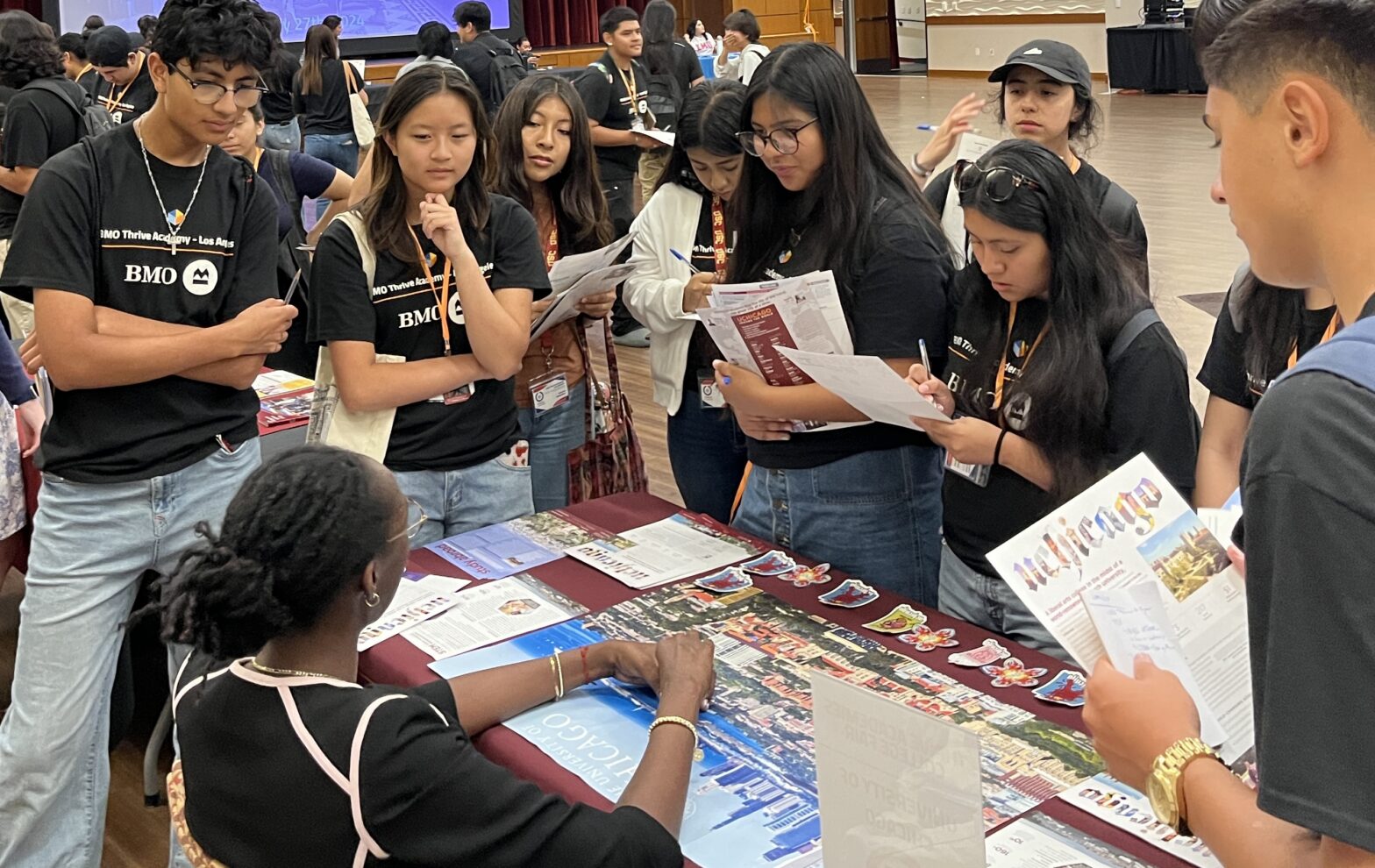
Going to a college fair and not sure where to start? Not sure what you should ask? Importantly, there’s no “right” way to approach college fairs. This is a time for you to learn more about various colleges, gain insight from college representatives, and have fun thinking about where you might go to college! Here’s some top tips about how to make the most of college fairs:
1. Have a list of the colleges coming to the fair? Do some advance planning.
Sometimes fairs can be overwhelming – so many colleges! For many fairs, you can see the list of colleges attending in advance. Any colleges you’re especially interested in or curious about? Make a list and try to visit those tables. This can help you make sure you visit the colleges you’re most excited about and consider what questions you might want to ask.
2. Share your contact information with colleges to learn more!
When you visit a college table, share your contact details. This is so colleges can provide you with more information, such as details about academic support, campus communities, a particular major you might be interested in, and/or any events for prospective students. For colleges that consider demonstrated interest in their review process, sharing contact details is one way that you can show you’ve thought seriously about whether the college is a right fit for you.
Some fairs use Strive Scan to collect your information; if so, make sure you set it up on your phone in advance. At others, you may scan a college’s contact QR code or visit a website. Some colleges may have a contact card, where you’ll handwrite your contact details.
3. Not sure what questions to ask? Consider what matters most to you and use those priorities to guide your conversations.
Before the college fair, take some time and think about what you’re looking for in a college. You can start with some of the basics: location (rural, suburban, urban), size (small, medium, large), major (not all college offer all majors), distance (close to home or further away), affordability (financial aid opportunities), campus life (activities and communities you may want to join), academic support (such as peer mentoring programs), and graduation outcomes (what students do after they graduate).
You can also gain some insights into how colleges review applications, such as what factors they consider during the admission process. Other priorities may be important to you as well – whatever they are, use them guide your conversations. If you know you want an internship in college, ask about how the college helps students find opportunities. Or maybe know there’s a specific sport you want to play or campus community you want to join – just ask!
4. Have fun and explore!
College is an exciting time – and that’s why fairs can be a lot of fun! College representatives not only want to answer your questions, they also want to help you envision what it’s like to be a student on their campus. Take the time to enjoy these conversations! And don’t be surprised if they spark you to want to learn more about a particular campus or reframe what you’re looking for in a college. It’s all part of the fun!